


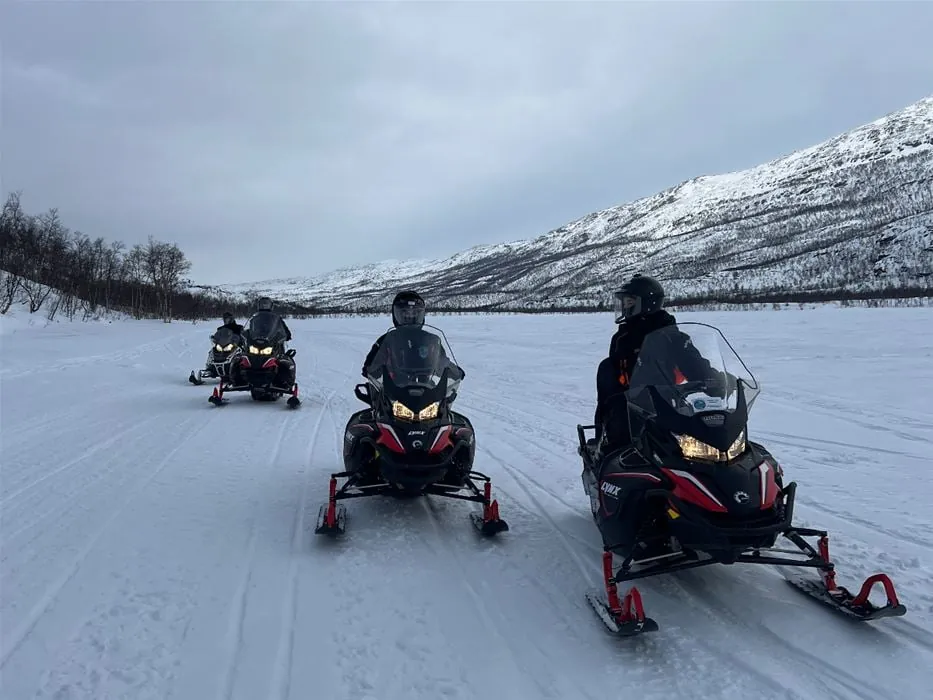
Snowmobiling in Nord-Troms is not just about speed and adrenaline. It is about moving through Arctic landscapes that few people ever experience in winter. You travel across frozen plateaus, along marked trails between birch forests, and up to viewpoints where fjords and mountains stretch endlessly in every direction.
Are you considering snowmobiling for the first time, or are you an experienced rider looking for new terrain? Here you will find practical information that helps you plan your trip safely and make the most of your winter adventure in Northern Norway.
Why choose snowmobiling in Nord-Troms?
Nord-Troms offers a rare combination of coastal scenery and high mountain terrain. Within a short distance, you can ride from fjord-level valleys to open mountain plateaus covered in snow from December to April. Snow conditions are generally stable in mid-winter, with February and March often providing the best combination of daylight and firm trails.
Unlike more crowded destinations, snowmobiling here feels spacious and authentic. You share the landscape with local residents, reindeer herders, and small communities that depend on winter transport. Snowmobiling is not only a tourist activity in this region; it is part of everyday Arctic life.
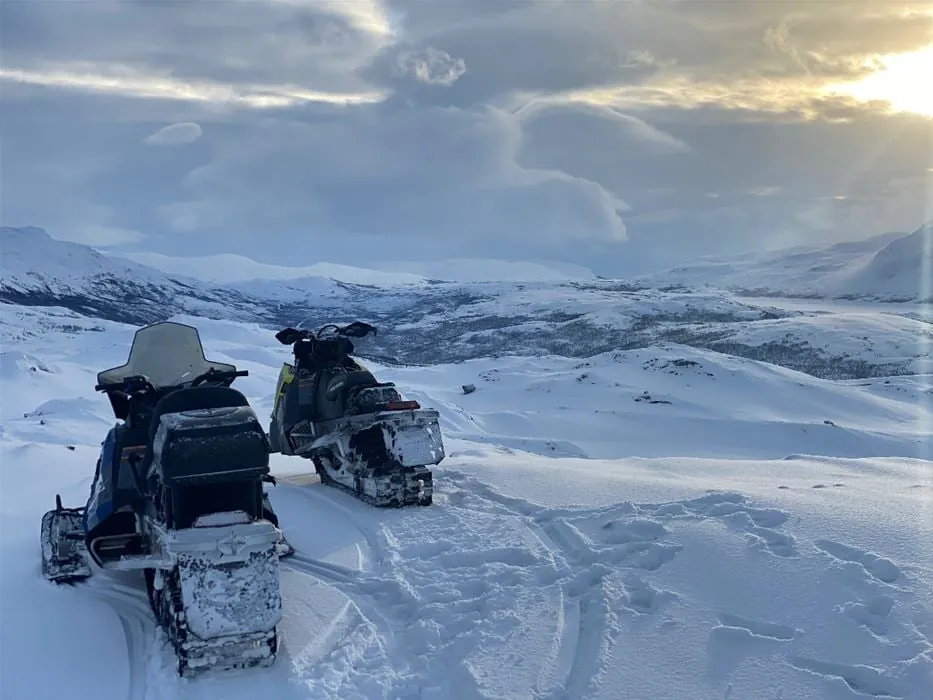
When the weather is clear, you may see Lyngen Alps rising dramatically across the fjord. On darker winter evenings, you even have the chance to combine snowmobiling with northern lights viewing. Imagine stopping the engine, turning off your headlamp, and watching green aurora ribbons move silently above you.
Do you need a license for snowmobiling in Norway?
Yes, in most cases you need a valid driver’s license to operate a snowmobile in Norway. If you are joining a guided tour, the operator will explain the specific requirements in advance. Generally, you must be at least 18 years old and hold a license that allows you to drive a snowmobile under Norwegian regulations.
If you do not have the required license, you can often join as a passenger with a guide driving. This option still gives you the full experience of the landscape without the responsibility of handling the vehicle.
Snowmobiling in Norway is strictly regulated to protect nature and wildlife. You must stay on marked trails. Riding off-trail is illegal and can result in fines. These regulations ensure that the Arctic environment remains intact and that reindeer grazing areas are respected.
Before you book, ask the operator about safety procedures, group size, and equipment. Professional guides provide helmets, thermal suits, gloves, and boots designed for Arctic temperatures that can drop below -15°C in mid-winter.
What should you wear for snowmobiling?
Even if you are provided with outer gear, you need proper base layers. Dress in wool or technical thermal underwear that keeps you dry. Avoid cotton, as it retains moisture and increases heat loss. Layering is essential because wind chill while riding can make the temperature feel significantly colder.
You should also wear warm socks, preferably wool, and bring a thin hat or balaclava to wear under your helmet. Sunglasses or goggles are important during bright spring days, especially from March onward when the sun reflects strongly off the snow.
Ask yourself: are you prepared for Arctic conditions, or are you packing as if you were going on a city trip? Proper clothing directly affects your comfort and safety.
When is the best time for snowmobiling in Nord-Troms?
The main season usually runs from December to April, depending on snow conditions. In December and January, you experience polar night and blue twilight landscapes. The light is soft and dramatic, but daylight hours are limited.
From February onward, the days become longer. By March, you often have several hours of daylight combined with stable snow and milder temperatures. This period is popular because it offers both good riding conditions and better visibility.
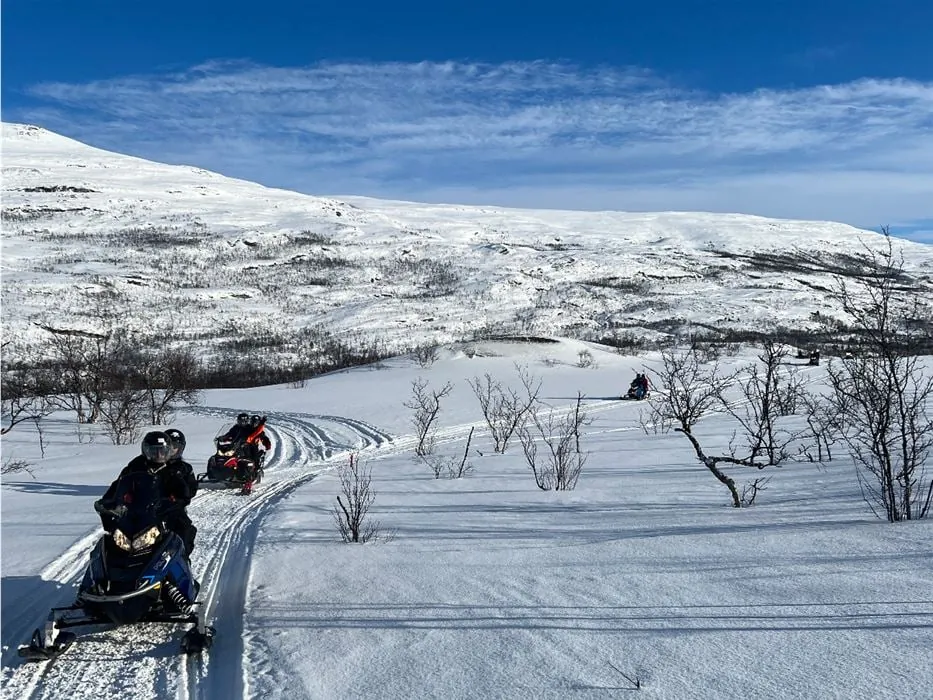
If you want to combine snowmobiling with northern lights, plan your trip between January and March. If you prefer more daylight and slightly warmer temperatures, late March and early April are excellent choices.
Always check local snow reports and weather forecasts before booking. Conditions can change quickly in Arctic regions, and guided operators adjust routes based on safety assessments.
Is snowmobiling safe?
Snowmobiling is safe when conducted responsibly and under guidance. Most tours in Nord-Troms follow established routes that avoid avalanche-prone terrain. Guides are trained to evaluate snow conditions and weather risks before departure.
You should listen carefully to the safety briefing. Keep a safe distance from other snowmobiles, maintain moderate speed, and follow the guide’s signals. Alcohol consumption before or during snowmobiling is strictly prohibited.
Remember that you are traveling in remote areas. Mobile coverage may be limited in the mountains. This is another reason why guided tours are strongly recommended unless you have extensive local knowledge and proper emergency equipment.
Combine adventure with comfort by the fjord
After several hours in Arctic winter conditions, your body will appreciate warmth and comfort. Staying close to both fjord and mountain terrain allows you to transition easily from outdoor adventure to relaxation.
A Sjøbuesuite with a private sauna offers exactly that balance. The suite is approximately 35 square meters and designed for up to four guests. You have a comfortable bedroom with a 150 cm double bed on the ground floor and two single beds on the loft, making it suitable for couples, friends, or small families.

The fully equipped kitchen includes a stove, refrigerator with freezer, kettle, and Nespresso machine, so you can prepare breakfast before your snowmobiling tour or enjoy a warm meal afterward. The living area features underfloor heating, which makes a noticeable difference on cold winter days.
One of the most distinctive elements is the glass floor section that allows you to observe marine life below when the tide is right. Fish, sea stars, and other creatures move beneath you, reminding you that the fjord is alive even in winter. Large windows and a private terrace offer uninterrupted fjord views.
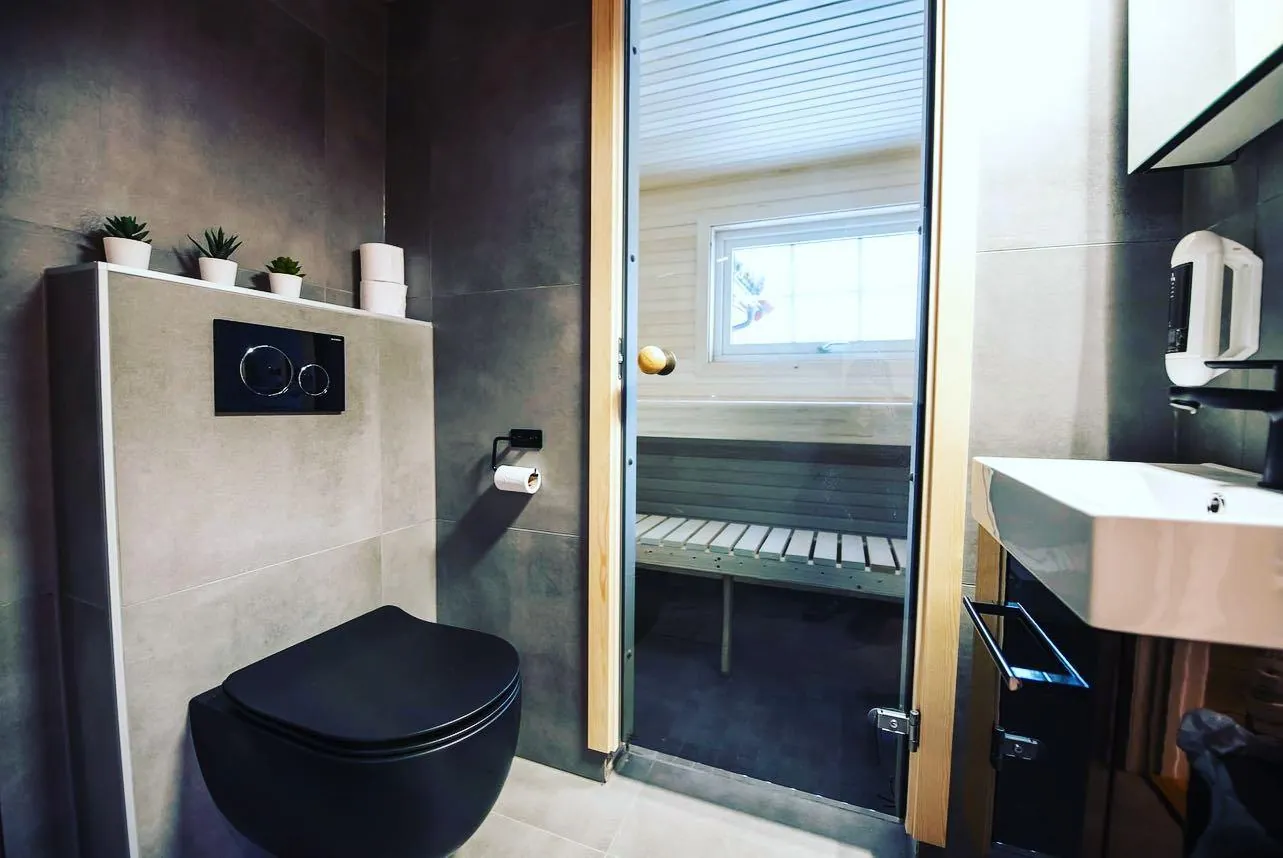
The private sauna in the modern bathroom becomes the highlight after a day of snowmobiling. Heat helps your muscles recover, improves circulation, and provides a calm end to an active day. You step outside afterward, breathe in crisp Arctic air, and perhaps see the northern lights reflecting in the fjord.
You can read more and book your stay here.
For questions or assistance, contact post@sjobuer.no or call +47 416 04 738. The address is Garver Hansensvei 63, 9144 Samuelsberg.
Respecting local culture and nature
Snowmobiling in Nord-Troms takes place in areas where Sámi reindeer herding is an important cultural and economic activity. Marked trails are designed to minimize disturbance. As a visitor, you share responsibility for respecting these traditions.
If you are interested in learning more, consider combining your winter adventure with cultural experiences in the region. Understanding how people have adapted to Arctic winters for generations adds depth to your trip.
Plan your snowmobiling experience wisely
Before you travel, confirm booking details, meeting points, and duration of the tour. Most guided snowmobiling trips last between two and four hours. Ask about group size; smaller groups often provide a more personal and flexible experience.
Check cancellation policies and weather contingencies. Arctic weather can change rapidly, and professional operators prioritize safety over schedule.
Snowmobiling in Nord-Troms offers more than a ride. It gives you access to winter landscapes shaped by snow, wind, and light. When you combine this adventure with comfortable fjord-side accommodation and a private sauna, you create a balanced Arctic experience that is both active and restorative.
Are you ready to feel the engine vibrate beneath you, to ride across white plateaus under a vast northern sky, and to return to warmth and quiet by the fjord? Then it is time to plan your winter journey north.